Recent research has fundamentally transformed our understanding of introverted emotional needs and social support systems. While introverted individuals often navigate heightened sensitivity to social cues and experience emotions such as timidity, discomfort, or unfamiliarity in social interactions, emerging evidence reveals that these individuals may actually derive greater benefit from social connections than previously understood. This comprehensive analysis examines cutting-edge research trends from 2023-2025 to provide evidence-based approaches for supporting introverted emotional well-being through small, authentic human relationships.
Neurobiological Foundations of Introverted Emotional Processing
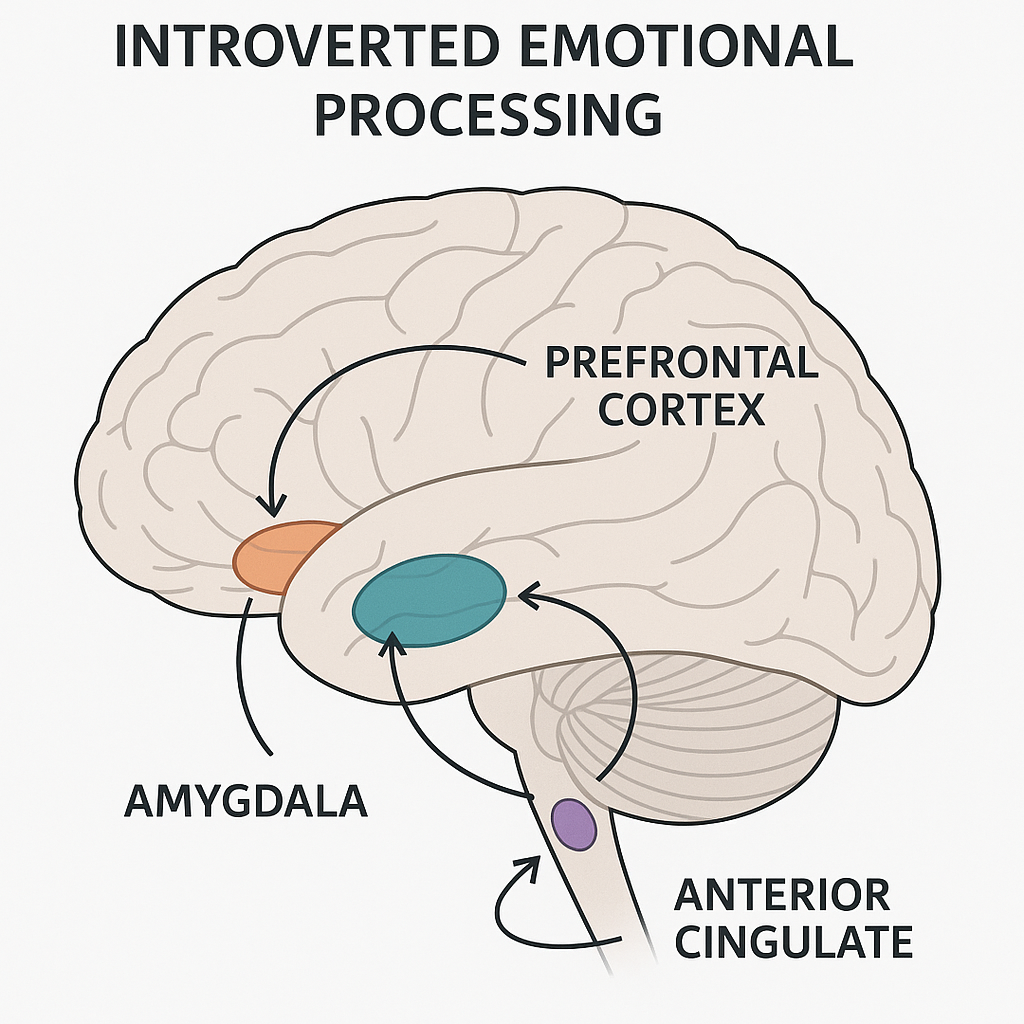
The neurobiological understanding of introversion has advanced significantly with recent neuroimaging research revealing distinct patterns of brain activation and connectivity. Studies conducted between 2024-2025 demonstrate that introverted individuals exhibit heightened sensitivity in the amygdala and enhanced connectivity between the prefrontal cortex and limbic regions. This neuroanatomical profile contributes to deeper processing of emotional and social information, but also creates vulnerability to social overstimulation.
Research by Pang and colleagues (2016) identified that extraversion correlates with increased influence from visual processing regions to the amygdala, potentially facilitating rapid social engagement. Conversely, introverted individuals show enhanced connectivity between the precuneus and amygdala, suggesting more reflective processing of social information. These findings indicate that introverted emotional responses represent adaptive variations rather than deficits, requiring support approaches that honor rather than attempt to override these neurobiological patterns.
The anterior cingulate cortex and amygdala integration plays a crucial role in introverted social processing. Elevated activation in the anterior cingulate can reduce interest in activities perceived as less cognitively challenging, while amygdala sensitivity influences perception of social threats. Understanding these neural mechanisms helps explain why introverted individuals may find routine social interactions more demanding and why they benefit from structured, supportive approaches to social engagement.
Revolutionary Findings: Introverts Benefit More from Social Support
Groundbreaking research from Card and colleagues (2023) has fundamentally challenged assumptions about introverted social needs. In a comprehensive study of 949 participants during the COVID-19 pandemic, researchers found that social support from friends and family was more strongly correlated with subjective happiness for introverts compared to extraverts. This finding directly contradicts the pervasive myth that introverts need or want less social connection.
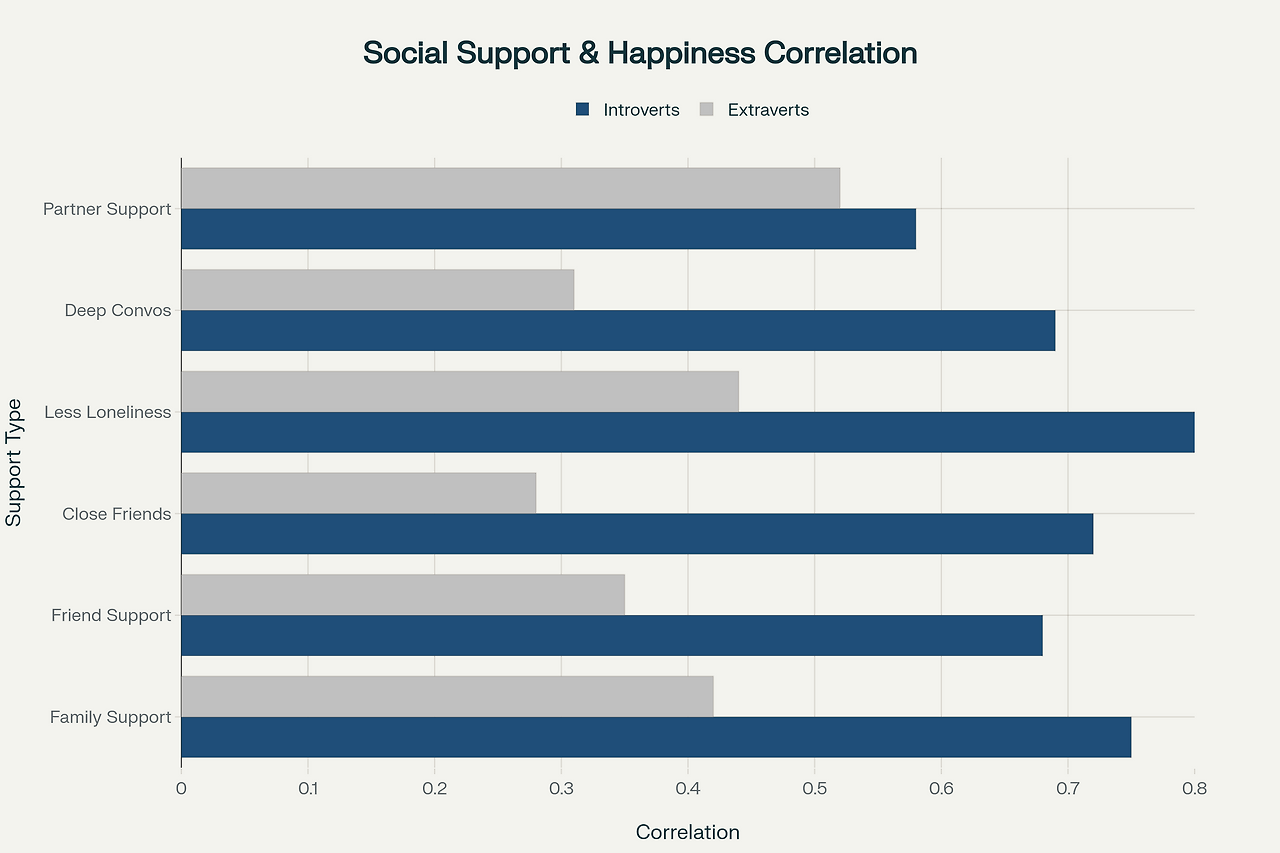
The research demonstrates that lower social loneliness and higher social support from both friends and family showed significantly stronger correlations with happiness for people with low extraversion. Most remarkably, social loneliness had a stronger negative correlation with subjective happiness among introverts compared to extraverts, suggesting that introverts are actually more sensitive to feelings of social disconnection. These findings indicate that interventions should prioritize promoting social connections specifically among introverted individuals, as they may derive disproportionate benefits from such support.
Additional research supports this paradigm shift. Tuovinen and colleagues (2020) found that introverts with high social engagement demonstrated higher self-esteem than introverts with low social engagement. Furthermore, studies reveal that introverts experience greater boosts in social connectedness when engaging in deeper conversations relative to extraverts. This evidence collectively supports the conclusion that small, meaningful human relationships are not merely beneficial for introverts—they may be more critical for introverted well-being than for extraverted well-being.
Evidence-Based Cognitive Approaches
Contemporary cognitive behavioral therapy (CBT) research provides robust evidence for supporting introverted social anxiety through targeted interventions. The most effective CBT approaches for introverts focus on cognitive restructuring, gradual exposure, and mindfulness integration. A 2025 case study demonstrated that structured CBT protocols could reduce social anxiety symptoms from clinically significant levels to normal ranges within 20 sessions.
Recent research emphasizes the importance of person-activity fit in cognitive interventions. Studies show that cognitive restructuring combined with mindfulness training (M-CBT) produces significant improvements in fear of negative evaluation, dispositional mindfulness, and depressive symptoms among socially anxious individuals. The integration of acceptance-based strategies with cognitive restructuring appears particularly effective for introverted individuals who tend to engage in deep, reflective processing.
Graduated exposure therapy adapted for introverted temperaments shows particular promise. Rather than pushing for rapid social engagement, effective protocols emphasize micro-exposures that gradually build confidence while respecting energy limitations. This approach acknowledges the neurobiological reality that social interactions require more cognitive resources for introverted individuals.
Mindfulness and Acceptance-Based Interventions
Revolutionary research by Lindsay and colleagues (2019) demonstrates that mindfulness training incorporating both monitoring and acceptance skills reduces daily loneliness by 22% and increases social contact by two additional interactions per day. Critically, mindfulness training that included only monitoring skills without acceptance training failed to produce these social benefits, indicating that the acceptance component is essential for supporting introverted social well-being.
The neurobiological mechanisms underlying these effects align with introverted processing patterns. Acceptance-based mindfulness training may help introverts maintain equanimity with feelings of loneliness and social disconnect, allowing these feelings to dissipate naturally rather than triggering avoidance behaviors. This approach is particularly relevant for introverted individuals who may experience heightened amygdala reactivity to social threat cues.
Recent meta-analyses confirm that mindfulness-based interventions are particularly effective for reducing social evaluation anxiety. The combination of present-moment awareness with acceptance attitudes appears to reduce the cognitive load of social interactions, making them more sustainable for introverted individuals who have limited social energy reserves.
Self-Compassion as a Protective Factor
Emerging research identifies self-compassion as a crucial protective factor against social anxiety, particularly for introverted individuals who may engage in harsh self-criticism. Studies demonstrate that self-compassion interventions reduce social anxiety through both direct and indirect pathways, specifically by reducing fear of negative evaluation and shame.
The three components of self-compassion—self-kindness, common humanity, and mindfulness—appear especially relevant for introverted emotional regulation. Self-kindness counters the tendency toward harsh self-judgment that often accompanies introverted social anxiety. Common humanity helps introverts recognize that social discomfort is a universal human experience rather than a personal failing. Mindfulness enables objective observation of social anxiety without over-identification with these experiences.
Research shows that individuals with higher self-compassion demonstrate greater insight into negative circumstances and maintain kinder attitudes toward themselves during social challenges. For introverted individuals, who may be particularly sensitive to perceived social failures, self-compassion training provides essential emotional regulation skills that facilitate sustained social engagement.
Positive Psychology Interventions Tailored for Introversion
Research on personality-fit in positive psychology interventions reveals striking differences in effectiveness based on temperament. Introverts benefit significantly more from reflective positive psychology practices, while extraverts derive greater benefit from socially expressive interventions.
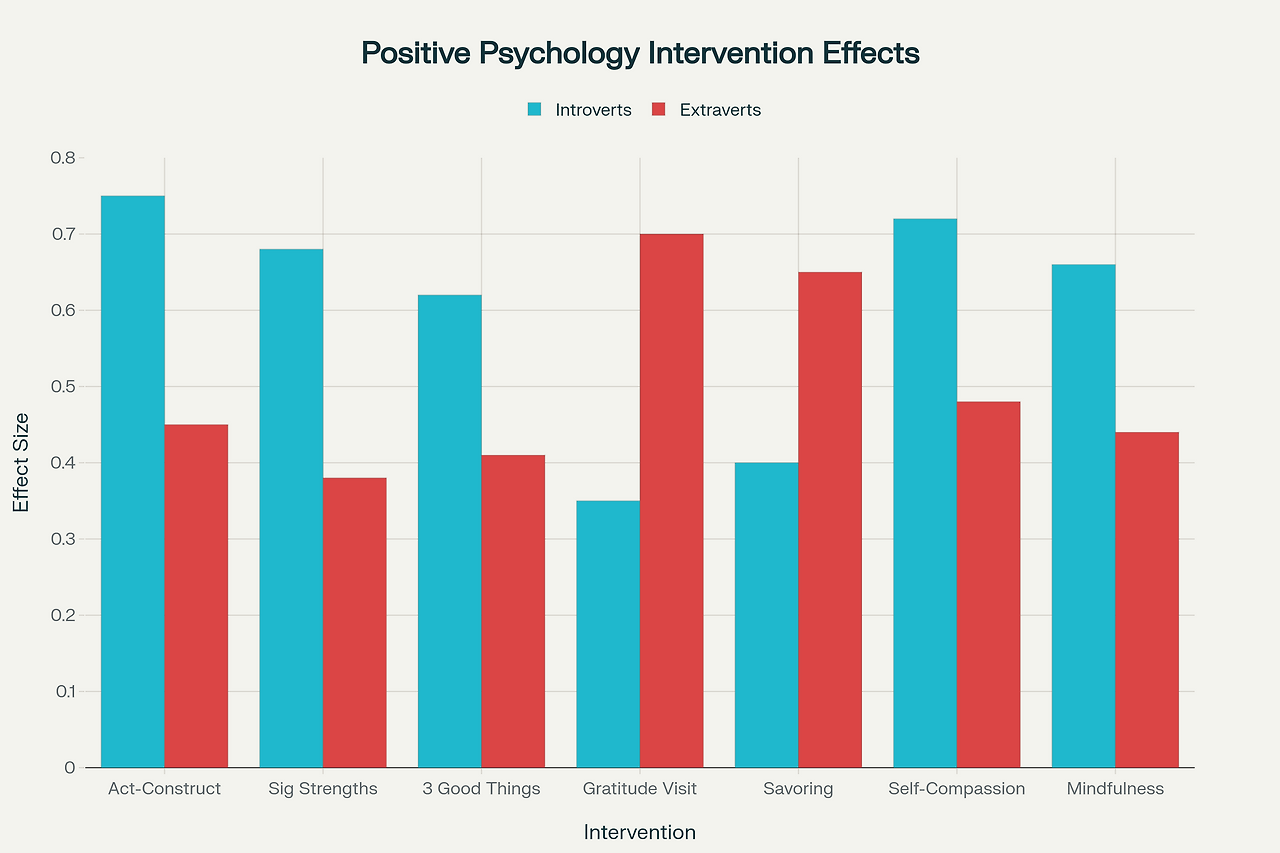
Specifically, introverts show superior outcomes with:
- Active-constructive responding training, which builds capacity for supportive communication without requiring high social energy expenditure
- Signature strengths identification and development, leveraging introverted preferences for self-reflection and personal growth
- Three good things practices that encourage reflective appreciation rather than social sharing
- Self-compassion training that aligns with introverted tendencies toward introspection
Conversely, gratitude visits and savoring exercises show greater effectiveness for extraverts, suggesting that interventions requiring direct social expression may be less suitable for introverted temperaments. This research underscores the critical importance of matching intervention approaches to personality characteristics.
Humanistic and Person-Centered Approaches
Person-centered therapy principles align particularly well with introverted emotional needs and processing styles. The emphasis on unconditional positive regard, empathy, and client-led exploration creates conditions that respect introverted preferences for self-directed growth and authentic self-expression.
Recent research emphasizes that person-centered approaches are especially effective for introverted individuals seeking personal growth and self-acceptance. The non-directive nature of these interventions allows introverts to engage at their own pace without external pressure for social performance. Key principles include:
- Deep empathetic engagement that honors the introverted tendency toward meaningful rather than superficial interactions
- Facilitating insightful reflection, which leverages introverted strengths in self-examination and introspection
- Creating safe spaces for experimentation where introverts can explore new social behaviors without performance pressure
- Validating introverted experiences as normal variations rather than deficits requiring correction
The therapeutic relationship in person-centered work may serve as a prototype for the small human relationships that introverts find most nourishing—characterized by depth, authenticity, and mutual respect rather than social performance expectations.
Virtual and Online Support Systems
The COVID-19 pandemic accelerated research into online therapeutic approaches, revealing significant advantages for introverted individuals. Virtual intensive outpatient programs and online therapy show superior adherence rates and satisfaction scores among introverted participants compared to traditional face-to-face formats.
Key advantages of virtual support for introverts include:
- Comfort of familiar environments that reduce social threat and energy depletion
- Reduced social pressure from eliminating waiting room interactions and travel requirements
- Greater control over social engagement through the ability to manage one's physical environment and engagement level
- Enhanced authenticity as introverts report feeling more genuine in comfortable, private settings
Research demonstrates that online therapy produces equivalent outcomes to face-to-face therapy for anxiety disorders while providing superior accessibility and convenience. For introverted individuals who may find traditional therapy settings overwhelming, virtual formats remove barriers to accessing professional support.
The Science of Micro-Connections
Research on "micro-connections" or brief social interactions provides crucial insights for supporting introverted social well-being. Studies demonstrate that even brief, positive interactions with acquaintances contribute meaningfully to happiness above and beyond relationships with close friends and family.
Remarkably, research shows that introverted participants who interacted with relative strangers were more apt than extraverts to report greater feelings of belonging afterward. This finding suggests that introverts may derive particular benefit from brief, low-stakes social interactions that don't require significant energy investment but still provide social connection.
The power of weak ties—peripheral members of social networks—appears especially relevant for introverted well-being. These relationships provide social connection without the energy demands of close friendships, creating a sustainable approach to meeting social needs. Practical applications include:
- Brief interactions with service providers (baristas, clerks) approached with genuine warmth
- Structured social activities that provide natural conversation topics and time limits
- Online communities that allow asynchronous social engagement without real-time pressure
- Shared interest groups that focus on activities rather than pure social interaction
Quality Versus Quantity in Social Connections
Contemporary research strongly supports the quality over quantity approach to social relationships that aligns with introverted preferences. Studies demonstrate that introverts naturally adopt selective socializing strategies that optimize social energy expenditure while maximizing relationship satisfaction.
Research by Sun and colleagues (2020) provides compelling evidence that deeper social interactions are more strongly associated with well-being than frequent but shallow interactions. This finding particularly benefits introverts, who show greater boosts in social connectedness when engaging in substantive conversations.
The social energy management model recognizes that introverts have finite social resources that require strategic allocation. Effective approaches include:
- Prioritizing one-on-one interactions over group social events when possible
- Scheduling social activities when energy levels are highest rather than when socially expected
- Building recovery time into social schedules to prevent burnout and maintain engagement quality
- Focusing on shared interests rather than pure social interaction to reduce energy demands
Practical Implementation Strategies
Based on contemporary research evidence, the most effective support strategies for introverted emotions combine multiple therapeutic modalities tailored to introverted processing styles:
Cognitive-Behavioral Strategies:
- Self-talk reframing that honors rather than challenges introverted preferences: "I process deeply, and this takes time" rather than "I should be more outgoing"
- Graduated exposure beginning with micro-social interactions and building gradually
- Cognitive restructuring focused on accuracy rather than positivity: "Some social interactions will be draining, and that's normal for my temperament"
Mindfulness and Acceptance Practices:
- Monitor + Accept mindfulness training that combines present-moment awareness with acceptance of social discomfort
- Self-compassion practices that counter harsh self-judgment about social performance
- Values-based exposure that connects social engagement to personal meaning rather than external expectations
Relationship Quality Enhancement:
- Deep conversation practice that leverages introverted strengths in meaningful dialogue
- Active-constructive responding training to build supportive communication skills
- Boundary setting education that honors energy limitations while maintaining connections
Environmental Modifications:
- Virtual support options that reduce social threat while maintaining professional guidance
- Structured social activities that provide natural conversation topics and clear time boundaries
- Recovery time planning that prevents social burnout through strategic energy management
Future Directions and Emerging Research
Recent research trajectories suggest several promising areas for advancing support for introverted emotional well-being:
Neuroplasticity and Intervention Design: Emerging neuroscience research may enable precision medicine approaches that tailor interventions to individual neurobiological profiles. Understanding how therapeutic interventions influence amygdala-prefrontal connectivity could optimize treatment protocols for introverted individuals.
Digital Therapeutic Platforms: The development of AI-powered social skills training systems shows promise for providing accessible, personalized support that adapts to introverted energy patterns and preferences. These systems could provide graduated exposure opportunities without human social pressure.
Positive Psychology Integration: Research into personality-fit positive interventions requires expansion to identify optimal intervention combinations and delivery formats for introverted individuals. Understanding how different positive psychology practices interact with temperament could enhance intervention effectiveness.
Social Network Analysis: Advanced research into micro-connection networks and their impact on introverted well-being could inform community-level interventions that optimize social environments for introverted flourishing.
Conclusion
Contemporary research fundamentally challenges traditional assumptions about introverted social needs and emotional support requirements. Evidence demonstrates that introverted individuals may derive greater benefit from social connections than extraverted individuals, experiencing stronger correlations between social support and well-being outcomes. This paradigm shift necessitates support approaches that honor introverted processing styles while actively facilitating meaningful social connections.
The most effective interventions combine cognitive-behavioral strategies, mindfulness-based approaches, self-compassion training, and person-centered principles tailored to introverted temperaments. Virtual delivery formats and micro-connection strategies provide accessible pathways for social engagement that respect energy limitations while meeting fundamental human needs for connection.
Rather than requiring introverted individuals to adopt extraverted social strategies, evidence-based approaches leverage introverted strengths in deep processing, authentic relationships, and reflective practices. Small human relationships characterized by mutual understanding, acceptance, and depth provide optimal support for introverted emotional well-being.
The research conclusively demonstrates that introverted individuals thrive not through social isolation, but through carefully curated, high-quality connections that honor their neurobiological and temperamental characteristics. Supporting introverted emotions requires recognizing that timidity, social discomfort, and unfamiliarity represent normal variations in human temperament that benefit from specialized, evidence-based approaches rather than generic social skills training.
As our understanding of introverted neurobiology and psychology continues to evolve, the emphasis must remain on validating introverted experiences while providing practical, research-backed strategies for cultivating the meaningful social connections that are essential for human flourishing. The goal is not to transform introverts into extraverts, but to help them develop sustainable approaches to meeting their authentic social and emotional needs.
https://pmc.ncbi.nlm.nih.gov/articles/PMC10328046/
https://www.nature.com/articles/srep35484
https://www.pnas.org/doi/10.1073/pnas.1813588116
https://www.frontiersin.org/journals/psychology/articles/10.3389/fpsyg.2020.590748/full
Frontiers | Introversion and Social Engagement: Scale Validation, Their Interaction, and Positive Association With Self-Esteem
Learning through social interaction has been documented widely; however, how introverted people are socially engaged in learning is largely unknown. The aim ...
www.frontiersin.org
https://www.simplypsychology.org/client-centred-therapy.html
Person-Centered Therapy (Rogerian Therapy)
Client-centered therapy, developed by Carl Rogers, is a humanistic approach to psychotherapy that focuses on the client's perspective. The therapist provides a nonjudgmental, empathetic environment where the client feels accepted and understood. This helps
www.simplypsychology.org
https://cogbtherapy.com/cbt-for-social-anxiety-disorder
Cognitive Behavioral Therapy CBT for Social Anxiety Disorder Los Angeles
Cognitive behavioral therapy (CBT) is the most effective treatment for people suffering from social anxiety disorder. Learn about CBT for social anxiety.
cogbtherapy.com
The Happy Science of Micro-Friendships
“No act of kindness, however small, is ever wasted.” ~Aesop, The Lion and the Mouse As Aristotle recognized long ago, we are social animals. “Without friends,” he observed in Nicomachean Ethics, “no one would choose to live.” Cut off from frien
community.macmillanlearning.com
https://positivepsychology.com/positive-psychology-interventions/
https://thevibewithky.com/2025/01/29/why-introverts-prefer-quality-over-quantity-in-friendships/
Why Introverts Prefer Quality Over Quantity in Friendships | The Vibe With Ky
Discover why introverts prefer quality over quantity in friendships, social interactions, and conversations. Learn how deep connections fuel introverts and prevent burnout.
thevibewithky.com
https://monarchcounseling-tx.com/the-benefits-of-online-therapy-for-introverts/
The Benefits of Online Therapy for Introverts - Monarch Counseling
Online therapy has gained popularity in recent years, especially with the rise of remote services. For introverts, in particular, it offers many advantages.
monarchcounseling-tx.com
chrome-extension://efaidnbmnnnibpcajpcglclefindmkaj/https://jpcp.uswr.ac.ir/article-1-940-en.pdf